ITR filing is mandatory for most small business owners and is essential for staying compliant with income tax laws. Whether you operate as a sole proprietor, partnership firm, or private limited company, filing your Income Tax Return accurately and on time helps you avoid penalties, claim eligible deductions, and maintain your business’s financial credibility. This guide explains who needs to file, the documents required, important deadlines, common mistakes to avoid, and how professional tax planning can help you save money.
Why ITR Filing Is Important for Small Business Owners
Filing your Income Tax Return (ITR) is more than just a legal requirement—it is an important part of managing your business finances. A properly filed return helps you:
- Stay compliant with the Income Tax Act.
- Avoid penalties and interest on late filing.
- Claim eligible deductions and tax benefits.
- Maintain a clean financial record.
- Improve your eligibility for business loans and credit facilities.
- Build trust with banks, investors, and government authorities.
Whether your business is profitable or has incurred a loss, filing your return on time is essential.
Who Needs to File an ITR?
Different business structures have different filing obligations. Generally, the following entities are required to file Income Tax Returns:
Sole Proprietors
A proprietorship business does not have a separate legal identity. The owner reports business income in their individual Income Tax Return.
Partnership Firms
All partnership firms must file an Income Tax Return, regardless of whether they have earned a profit or incurred a loss during the financial year.
Private Limited Companies
Every private limited company is required to file an Income Tax Return annually, even if there was no business activity or income during the year.
Documents Required for ITR Filing
Keeping your documents organized before filing makes the process quicker and reduces the chances of errors.
Essential Documents
- PAN Card
- Aadhaar Card
- Bank statements
- GST Returns (if applicable)
- Purchase invoices
- Sales invoices
- Profit & Loss Account
- Balance Sheet
- TDS certificates
- Investment proofs (if claiming deductions)
Maintaining proper bookkeeping throughout the year makes tax filing significantly easier.
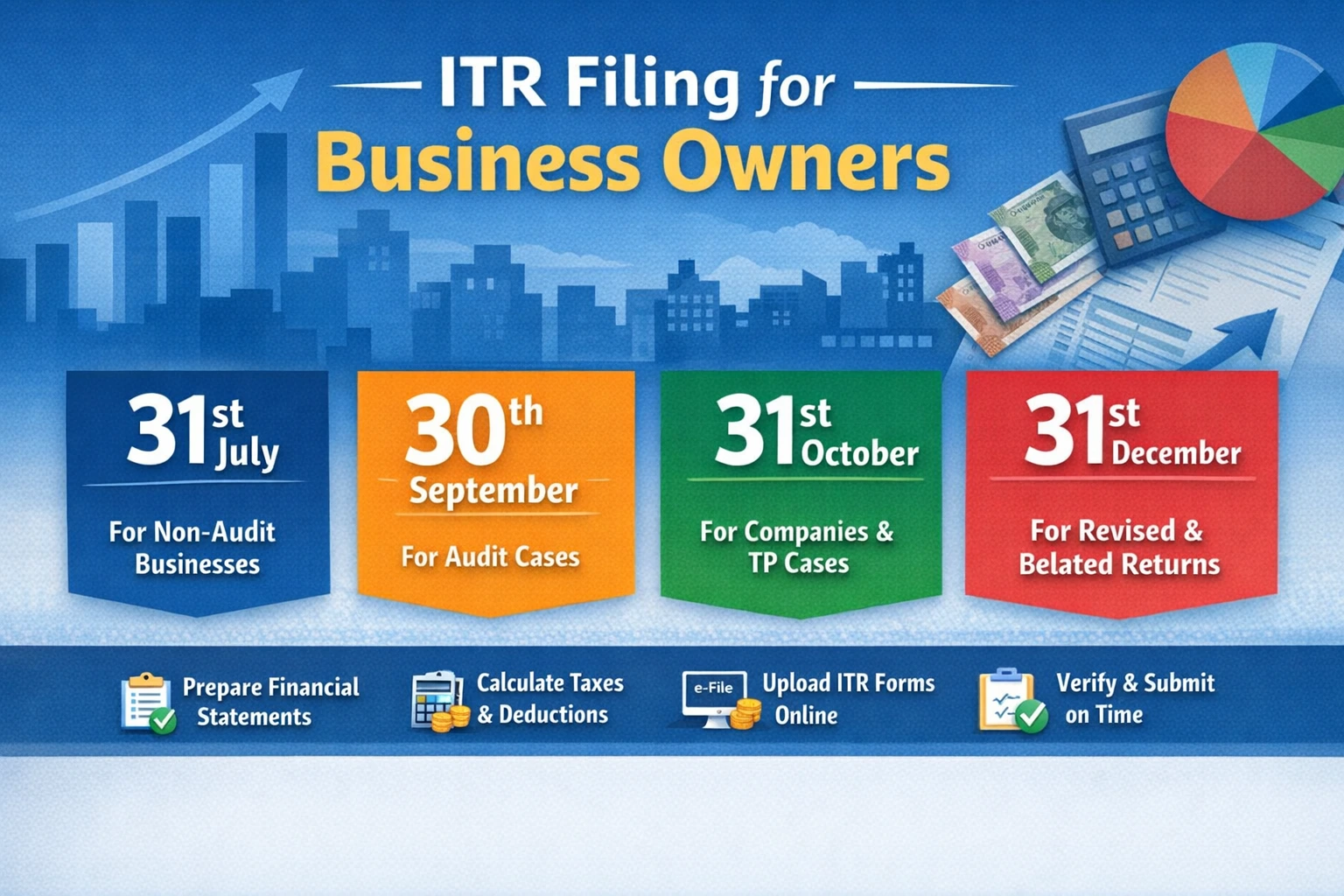
Important ITR Filing Deadlines
Missing the filing deadline can result in penalties, interest, and delayed refunds.
| Taxpayer | Due Date |
|---|---|
| Individuals (including most proprietors not requiring audit) | 31st July |
| Businesses requiring Tax Audit | 31st October |
Note: Due dates may be extended by the Income Tax Department in certain years. Always check the latest notifications before filing.
Common Mistakes Small Business Owners Should Avoid
Many business owners make avoidable errors while filing their returns.
Choosing the Wrong ITR Form
Selecting an incorrect ITR form may result in a defective return notice and delays in processing.
Missing TDS Credit
Always verify your TDS details with Form 26AS and the Annual Information Statement (AIS) before submitting your return.
Not Declaring All Sources of Income
Your return should include every taxable source of income, including:
- Business income
- Interest income
- Rental income
- Capital gains
- Any other taxable earnings
Failure to disclose income may lead to notices and penalties.
Incorrect Financial Figures
Ensure your turnover, expenses, GST records, and financial statements match your books of accounts.
Waiting Until the Last Minute
Last-minute filing increases the risk of mistakes, technical issues on the tax portal, and missed opportunities to review your return carefully.
Tax Planning Can Save Your Business Money
One of the biggest mistakes small business owners make is paying more tax than necessary due to poor tax planning.
A qualified Chartered Accountant can help you:
- Identify all eligible deductions.
- Structure expenses correctly.
- Reduce your tax liability legally.
- Ensure compliance with income tax and GST regulations.
- Avoid costly errors and notices from the tax department.
Professional tax planning often results in substantial savings while giving you peace of mind.
Tips for Hassle-Free ITR Filing
Follow these best practices to simplify your tax filing process:
- Maintain updated accounting records throughout the year.
- Keep all invoices and supporting documents safely.
- Reconcile your bank statements regularly.
- Match GST records with your books of accounts.
- Verify Form 26AS and AIS before filing.
- Consult a Chartered Accountant if you’re unsure about deductions or compliance requirements.
Benefits of Filing Your ITR on Time
Timely filing offers several advantages:
- Avoids late filing fees and penalties.
- Speeds up income tax refund processing.
- Helps carry forward eligible business losses.
- Improves financial credibility.
- Ensures hassle-free compliance with tax regulations.
- Reduces the likelihood of receiving tax notices.
Conclusion
Income Tax Return filing is an important responsibility for every small business owner. Whether you run a proprietorship, partnership firm, or private limited company, understanding the filing requirements, maintaining proper documentation, and meeting deadlines can help you stay compliant and financially secure.
With proper tax planning and professional guidance, you can not only avoid costly mistakes but also reduce your tax burden and focus on growing your business.
Frequently Asked Questions (FAQs)
1. Who is required to file an ITR for a small business?
Sole proprietors, partnership firms, and private limited companies generally need to file Income Tax Returns as per applicable tax laws.
2. What documents are required for business ITR filing?
You typically need your PAN, Aadhaar, bank statements, GST returns (if applicable), purchase and sales invoices, financial statements, and TDS details.
3. What is the ITR filing due date?
For most individuals, including many proprietors not requiring an audit, the due date is 31st July. Businesses requiring a tax audit generally have a due date of 31st October, unless extended by the government.
4. What are the most common ITR filing mistakes?
Common mistakes include selecting the wrong ITR form, failing to claim TDS credit, not declaring all sources of income, and reporting incorrect financial information.
5. Why should I hire a Chartered Accountant for ITR filing?
A Chartered Accountant helps ensure accurate filing, maximizes eligible deductions, minimizes tax liability, and reduces the risk of penalties and tax notices.
Need Professional Assistance?
Have questions? Contact Anand Behl Verma & Co. at [+91-8909988339] or WhatsApp us directly. Our experienced tax professionals are ready to help you file your Income Tax Return accurately, maximize tax savings, and ensure complete compliance with income tax laws.